Digital Thread
A digital thread is defined as a connected data flow linking process design, execution, monitoring, and improvement into a single traceable record.



A digital thread is defined as a connected data flow linking process design, execution, monitoring, and improvement into a single traceable record.
A digital thread is an integrated data framework that creates a continuous, traceable flow of information across every stage of a process lifecycle. It connects the data generated during process design, process execution, conformance monitoring, and improvement into a single coherent record. The thread does not centralize all data in one place; it provides the connective layer that links data across the systems and tools involved in each lifecycle stage.
The digital thread concept originated in product engineering, where it describes the connected data record that traces a physical product from design through manufacturing and maintenance. In process management, the same principle applies: the digital thread is the data flow that connects process design decisions, execution data from enterprise systems, conformance monitoring results, and improvement actions into a continuous, traceable record of how a process was designed, how it has been executed, and how it has been changed over time.
The essential property of a digital thread is continuity across lifecycle stages. A BPMN process model documents design intent. An event log records execution reality. A conformance check measures the gap between the two. A simulation models the projected outcome of a proposed change. The digital thread is the connection between these stages: what was learned in execution informs the model, and what was decided in the model informs monitoring.
Without a digital thread, process lifecycle data is fragmented: design documentation in a process modelling tool, execution data in a process mining platform, conformance results in an analytics report, improvement decisions in a project management system. Each system has part of the story. The digital thread connects those systems so that the full process lifecycle is traceable from one place.
In a process management context, the digital thread connects four data layers:
The digital thread is the mechanism by which changes in one layer flow into adjacent layers: execution data updates performance metrics, conformance findings trigger model reviews, simulation results inform improvement decisions, and updated design decisions flow back into the design record.
The digital thread and the digital twin are related concepts that are frequently discussed together, but they serve different functions in process management.
| Dimension | Digital thread | Digital twin |
|---|---|---|
| What it is | A connected data flow across process lifecycle stages | A model representing the current state of a process |
| Primary function | Traceability — connecting process data across time and systems | Monitoring and simulation — representing current execution and testing scenarios |
| Data direction | Bidirectional — captures history and propagates changes | Current-state, continuously updated |
| Scope | The full process lifecycle — from design through improvement | Current operational state plus scenario-testing capability |
| Relationship | Provides the data infrastructure that the digital twin uses | Consumes the connected data that the thread supplies |
The digital thread is the data infrastructure that makes a process digital twin possible. The twin represents the current state of process execution; the thread is how that state stays connected and current as data flows from source systems into the model. A process digital twin without a supporting digital thread is a snapshot: accurate when created, degrading as execution evolves without the model updating.
In practice, the digital thread and the process digital twin operate as a system. The thread connects the data sources: SAP S/4HANA event logs, BPMN models in SAP Signavio, conformance monitoring rules, and simulation parameters. The twin consumes that connected data to present a current, accurate model of process execution. When a process changes (a new approval step is added, a system is upgraded, a business rule changes), the thread propagates that change through connected data layers and the twin updates to reflect the new state.
For a Head of Process Excellence, this means improvement decisions made in the process model flow through the thread into the monitoring layer, and execution signals from the monitoring layer flow back to inform the next round of decisions. The result is a continuous improvement cycle backed by current data at every stage.
For process excellence teams, the digital thread delivers value across several areas:
In process engineering and business process management, the digital thread connects three domains that are often managed separately: process design, process execution, and process governance.
Process design, the discipline of documenting and structuring how business processes should operate, produces BPMN models that capture the intended flow, roles, decision points, and performance targets. These models are the authoritative design record and the structural foundation of the digital twin.
Process execution, the operational reality of how processes run, produces event log data recorded by enterprise systems as transactions are processed. This data is the evidential record of process performance and the primary input for process mining.
Process governance, the ongoing management of process performance, conformance, and improvement, requires current data from both design and execution to function effectively. Without the digital thread connecting design records to execution data, governance operates on information that is always partially out of date.
The digital thread is the infrastructure that connects these three domains. In a BPM maturity model, organizations that have established a digital thread across design, execution, and governance have moved beyond episodic process improvement, driven by annual reviews or audit findings, to continuous process management, where the organization maintains a live, connected view of process performance and acts on signals as they arrive.
Making that thread work in practice depends on the tools that occupy each layer and how well they connect.
The digital thread in a process management context spans several categories of tooling:
SAP Signavio Process Intelligence operationalizes the process digital thread within a single integrated platform. It connects event log extraction from source systems, BPMN design records, conformance monitoring rules, and simulation. For SAP environments, this extraction is native; for non-SAP environments, standard connectors perform the same function. When the process design changes, the conformance monitoring layer recalibrates against the new model automatically. The connection between the design record and the monitoring layer persists as both evolve.
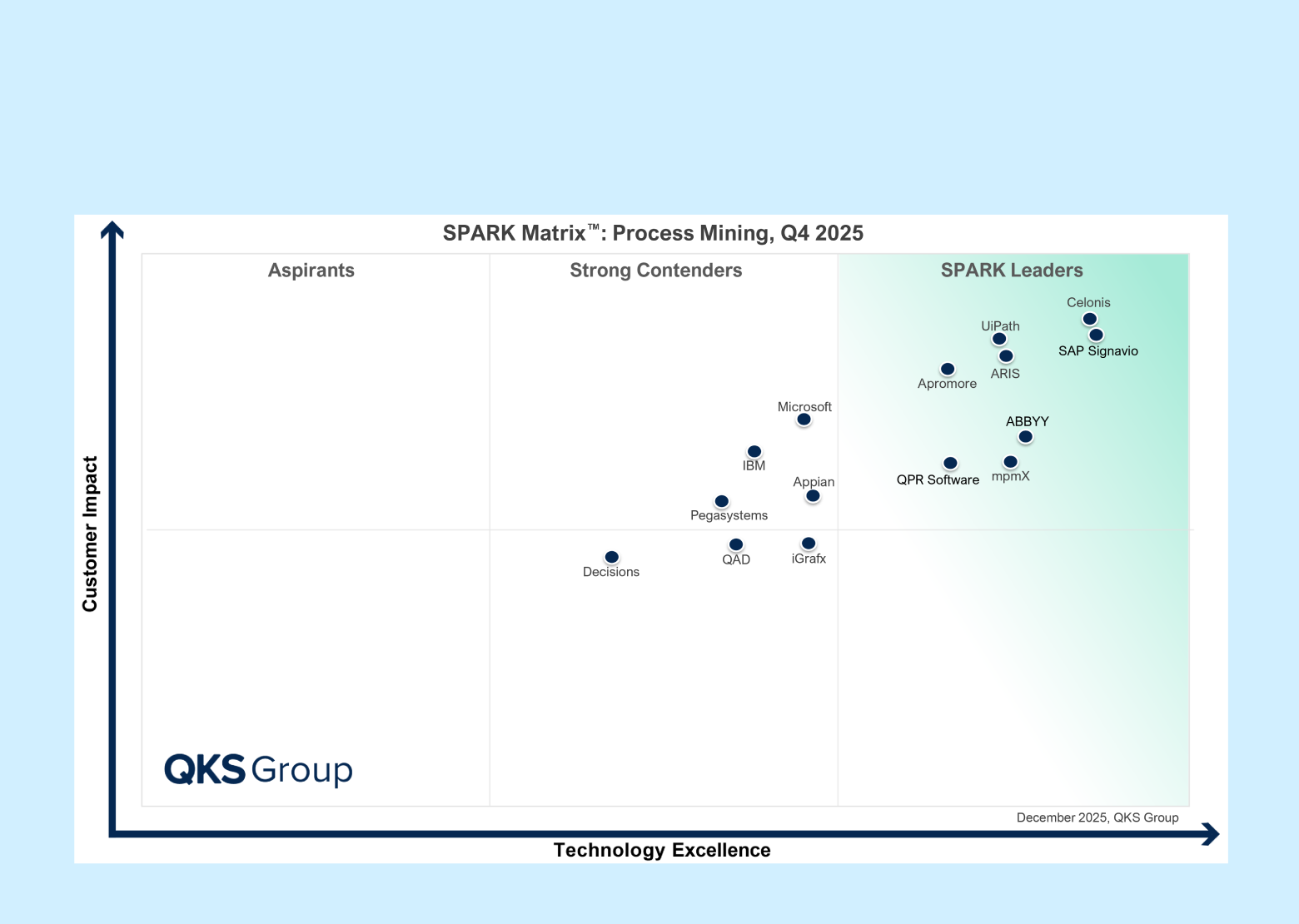
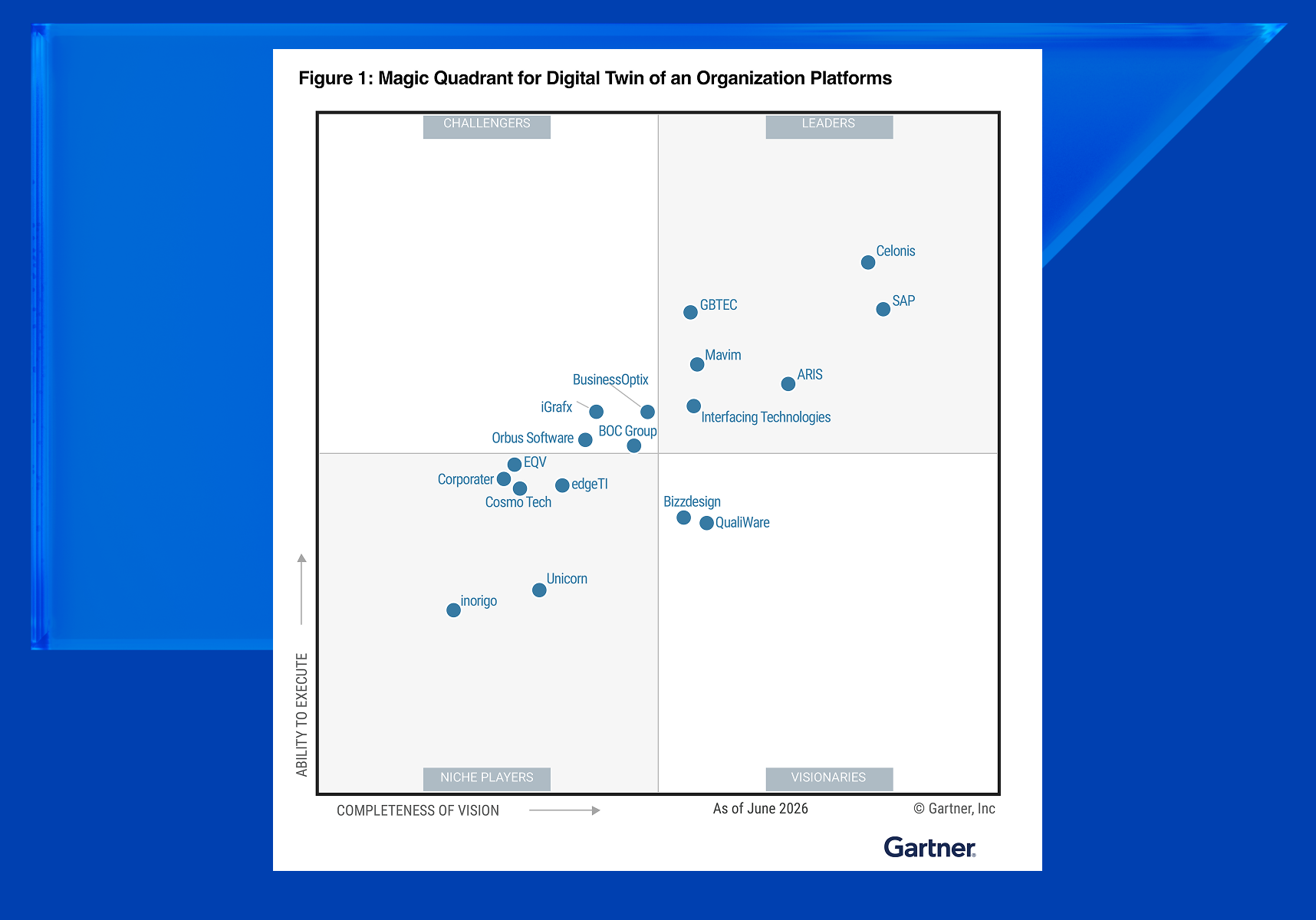
Download your complimentary copy of the report and see how SAP solutions were evaluated in this category.

No. A data integration project connects systems to enable data exchange. The digital thread is the persistent, governed connectivity that results from that integration: it grows as new systems are added and serves specifically to support process lifecycle traceability. The integration is the mechanism; the thread is the outcome.

Gartner, Inc. Magic Quadrant for Digital Twin of an Organization Platforms. Marc Kerremans, David Sugden, etl. 27 July 2026.
Gartner and Magic Quadrant are trademarks of Gartner, Inc. and/or its affiliates.
Gartner does not endorse any company, vendor, product or service depicted in its publications, and does not advise technology users to select only those vendors with the highest ratings or other designation. Gartner publications consist of the opinions of Gartner's business and technology insights organization and should not be construed as statements of fact. Gartner disclaims all warranties, expressed or implied, with respect to this publication, including any warranties of merchantability or fitness for a particular purpose.