Process
Transformation
HUB

Understand process transformation in a practical way and move into the topics, frameworks, and examples that explain how organizations improve their processes.

Process transformation is the structured way organizations redesign how work is performed across people, systems, and functions. It focuses on improving business processes so they align with strategic objectives, regulatory requirements, and operational goals.

Within the broader context of business transformation, process transformation addresses the operational layer of change. While business transformation defines what an organization wants to achieve, process transformation defines how daily work must evolve to support that direction.

To manage this change consistently, organizations rely on business process management (BPM). BPM provides the methods, governance, and modeling standards needed to document processes, analyze performance, and guide redesign efforts in a structured way.

Process transformation therefore creates the foundation for improvements such as standardization, ERP modernization, compliance alignment, automation, and performance optimization.

A Business Transformation Blueprint
Learn how organizations translate strategy into structured transformation programs with clear goals, governance models, and execution frameworks.
Navigating the Complexities of Business Transformation
Explore common transformation challenges and how organizations manage risk, align stakeholders, and coordinate large-scale change initiatives.
AI-Assisted Business Transformation
Understand how AI supports transformation initiatives and why many organizations recognize its value but struggle with practical adoption.
What Is Business Process Management?
A clear introduction to BPM, explaining how organizations document, manage, and continuously improve processes in a structured way.
The Value of Business Process Management
Learn how BPM improves transparency, coordination, and performance across departments by standardizing how processes are managed.
Business Process Management Challenges
Discover common obstacles organizations face when implementing BPM, including governance gaps, resistance to change, and inconsistent process ownership.

Where Transformation Creates the Most Impact

Organizations turn to process transformation when operational complexity slows performance, systems evolve, or compliance expectations increase. These situations often surface when workflows lack transparency, execution varies across teams, or critical processes fail to meet performance targets. In these scenarios, structured process transformation delivers measurable business impact:
  • Reducing process complexity
    Over time, processes accumulate exceptions, manual steps, and local variations. Transformation simplifies workflows, restores consistency, and reduces unnecessary coordination effort.
  • Fixing performance gaps in critical processes
    When cycle times increase or service levels decline, transformation uncovers root causes and redesigns the steps that affect speed, quality, and reliability.
  • Preparing for large technology changes
    ERP programs, system upgrades, and platform migrations require clarity about the current way of working. Transformation provides this baseline and highlights where processes must adapt.
  • Improving handovers across functions
    Cross-department workflows often break when information is incomplete or responsibilities are unclear. Transformation helps redefine roles and structure work across business units.
  • Reducing operational risk
    Organizations use transformation to detect deviations, strengthen internal controls, and reduce compliance exposure in regulated or high-risk environments.
  • Scaling automation programs
    Automation initiatives depend on stable, repeatable processes. Transformation identifies suitable candidates and prepares them for RPA, workflow automation, or AI-driven tools.

Why BPM is the Method Behind Successful Change

Process change becomes manageable when it follows a clear structure. Business Process Management (BPM) provides that structure.

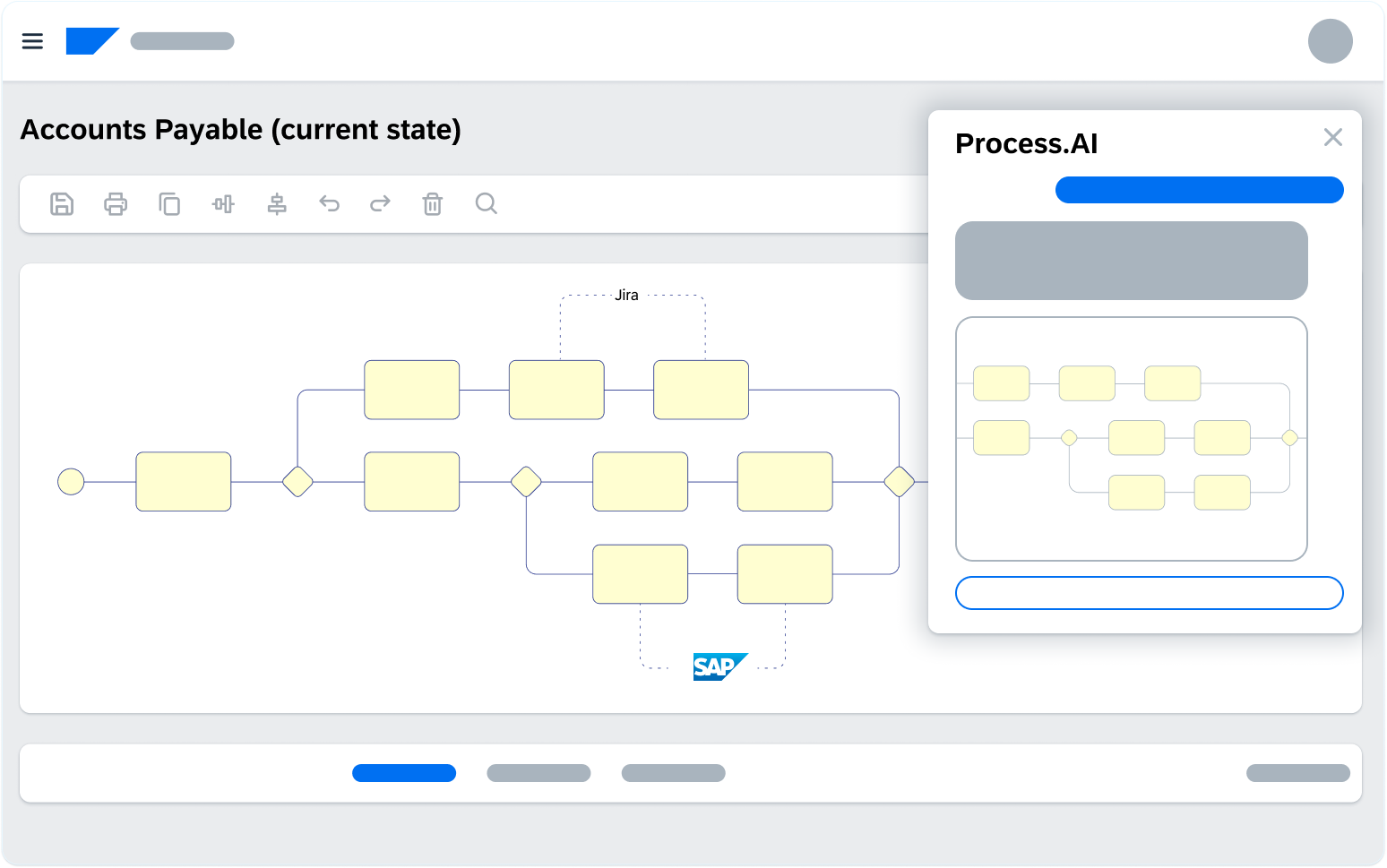
BPM defines how processes are documented, analyzed, redesigned, and governed. Instead of treating improvements as isolated initiatives, BPM creates a consistent way to understand how work is performed and how it should evolve.

By using BPM, organizations establish shared models, defined ownership, measurable KPIs, and clear governance. This reduces ambiguity, improves coordination across teams, and makes change repeatable.

Most importantly, BPM ensures that process improvements are sustained over time. It turns change from a one-time effort into an ongoing management practice.

How BPM Works?
BPM structures process change through a clear lifecycle. Each stage focuses on a different aspect of understanding, improving, and managing processes. The following sections introduce the core stages that support sustainable organizational change.

Process Discovery
Process Analysis
Process Design
Process Implementation
Process Optimization

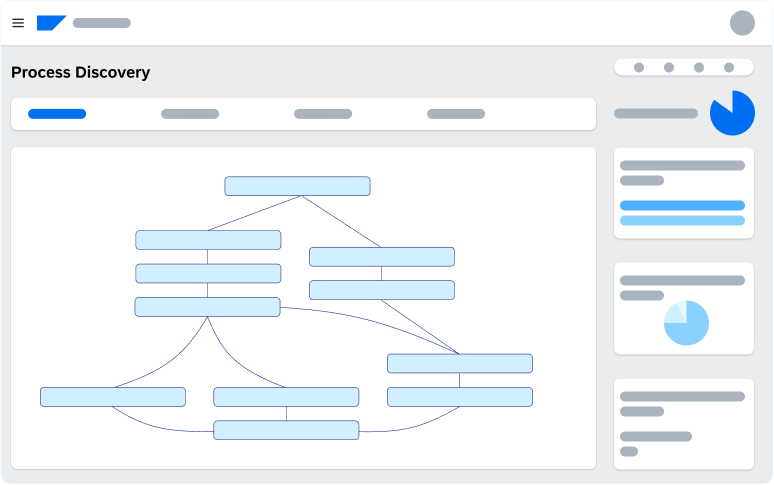
Build transparency into how work actually happens

The Process Discovery hub explores methods for mapping workflows, capturing operational data, and identifying how processes are executed across systems and teams.

Process Transformation Examples

Organizations use process transformation to solve operational bottlenecks, modernize complex systems, and improve coordination across teams. Real-world examples show how structured process methods turn visibility into measurable results.

These case studies illustrate how companies uncovered execution gaps, redesigned critical workflows, and strengthened performance through data-driven decision-making. They demonstrate what changes, how it changes, and what impact follows.


Key Patterns

How companies identify hidden process problems
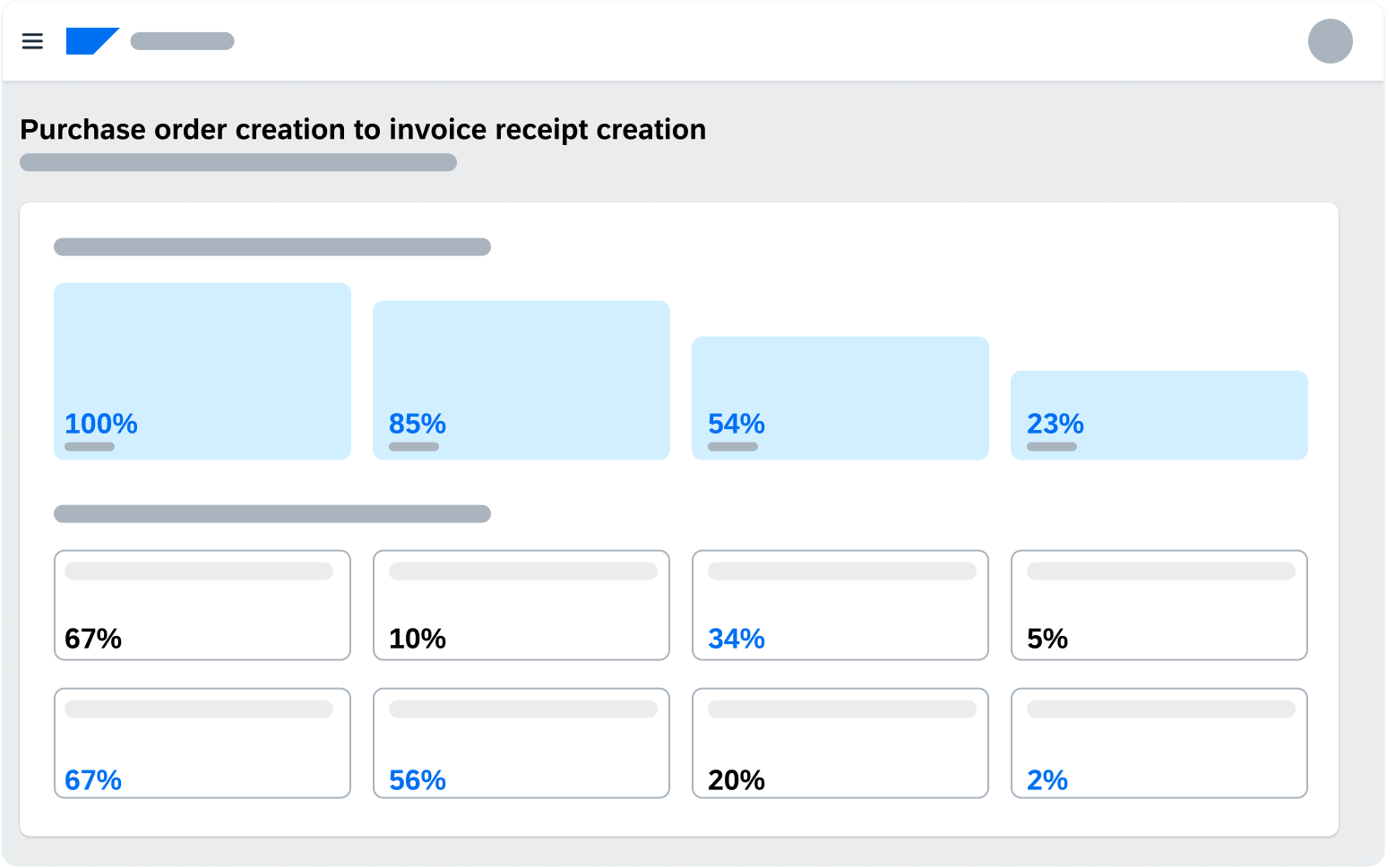
Process insights reveal unexpected variations, manual work-arounds, and gaps between defined procedures and actual execution.
How the improvements changed daily operations
Teams achieve faster cycle times, fewer errors, improved compliance stability, and more predictable service delivery.
Which business processes were redesigned
Common focus areas like Order-to-Cash, Procure-to-Pay, production workflows, finance processes, or shared services.
How process insights enabled large-scale change
Process transparency supports ERP modernization, automation initiatives, and operating model shifts by clarifying how work truly flows.

BHP: Improving Shared Services Through Process Visibility
Enhanced shared services operations by increasing process transparency, identifying performance gaps, and redesigning workflows to support a modern service delivery model.
TEVA: Unifying Global Operations with Process Insights
Standardized global processes across regions, reduced variation, and improved operational performance through structured process analysis and cross-functional alignment.
Qorvo: Driving Production Improvements with Process Mining
Used process mining to uncover root causes of delays and inefficiencies, enabling targeted improvements across production and supply chain processes.
Danish Crown: Scaling Automation Through Process Analysis
Identified automation opportunities by analyzing process performance data and understanding where manual activities slowed execution and increased complexity.

Challenges

Redesigning processes sounds simple. In reality, teams run into the same issues again and again. Most problems appear when people don’t have a clear picture of how work actually happens.

If these issues are ignored, transformation slows down or stalls.

Limited visibility into how work really runs
Many teams rely on outdated documentation or assumptions. When no one sees the full process, it’s hard to spot bottlenecks or fix the right problem.
Siloed teams and inconsistent practices
Different departments often work in different ways. Over time, small variations create friction, delays, and confusion across handovers.
Resistance during implementation
Even well-designed processes can fail if people don’t understand the change, trust the data, or know who owns what.

Best Practices

Improving processes works better when teams follow a clear structure. Without shared standards, even good ideas can lose momentum or create new confusion.

These practices help teams stay aligned, make better decisions, and keep progress steady over time.

Start with real data, not opinions
Use process mapping, performance metrics, and system data to understand what is actually happening before making changes.
Define clear ownership
Every key process should have someone responsible for its performance and improvement. Clear ownership prevents confusion later.
Improve in steps, not in one big wave
Transformation works better when changes are tested, measured, and refined over time instead of launched all at once.
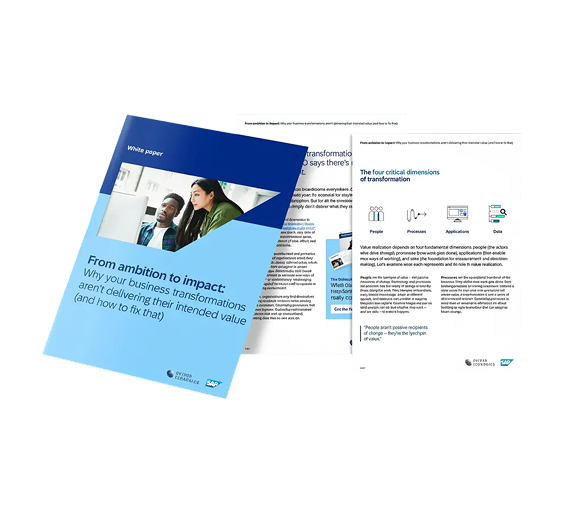
Delivering value in business transformation management
Download the white paper to rethink your transformation strategy and start turning effort into impact.

FAQs

Who is responsible for leading process transformation?

Process owners, analysts, and transformation leads guide the work, but long-term success requires support from business leaders and participation from operations teams.

What is the purpose of process transformation?

How it process transformation different from process improvement?

Which processes should be transformed first?

How long does a process transformation take?

Do you need technology to run a process transformation?