As-Is & To-Be Process Mapping
As-is and to-be process mapping compares how a process works today with how it should work in the future after improvement or redesign.



As-is and to-be process mapping compares how a process works today with how it should work in the future after improvement or redesign.
Process mapping is a way to visualize how work moves through activities, decisions, roles, and systems. It is one of the main techniques used in process discovery because it helps teams build a shared understanding of how a process works.
In many organizations, process mapping starts with workshops, interviews, and current-state documentation. In more complex environments, teams may also use process mining to validate how the process actually runs in system data. Together, these methods help make the current process visible before any redesign begins.
This is where as-is, to-be, and to-do process mapping become important.
These three map types describe different stages of process work. They are connected, but they serve different purposes.
An as-is map focuses on the current state. It is used to understand how the process works today and supports process discovery.
A to-be map focuses on the future state. It is used to define how the process should work after improvement and supports process design.
A to-do map focuses on the transition between the two. It is used to define what needs to change to move from the current process to the future process and supports process implementation.
In simple terms:
Used together, these maps help teams move from understanding the current process to designing and implementing a better one.
An as-is process map shows how a process works today. It captures the current flow of activities, decisions, roles, systems, and handoffs as they exist in practice.
This is the version of the map most closely tied to process discovery. Its purpose is not to show how the process should work, but to make the current state visible enough for teams to understand it, discuss it, and later improve it.
A strong as-is map reflects the real process rather than the intended one. That means it should include the steps people actually follow, not just the official process description.
In practice, that often means capturing:
These details matter because they explain why the process behaves the way it does. Without them, the map may look clean but fail to represent reality.
As-is mapping creates the baseline for everything that follows. Before teams redesign a process, automate part of it, or standardize it across the business, they need to understand how it currently works.
This matters especially when different stakeholders have different assumptions about the same process. An as-is map helps create a shared understanding of the current state and makes hidden issues easier to discuss.
In more complex environments, teams may also use process mining to validate whether the as-is map matches actual execution in system data. This is useful when the documented flow and the real flow may differ.
As-is mapping is most useful when the goal is to understand the current state before making changes.
Common use cases include:
In each case, the value comes from creating a clear picture of the process as it exists today.
Creating an as-is map starts with documenting the process as it works today, not as people think it should work. The purpose is to build a reliable current-state view that can support later analysis and improvement.
A practical way to create it is to follow these steps:
Be clear about where the process starts and ends. This helps the team avoid mapping too much or too little.
Involve the people who do the work, not only managers or process owners. This is important because frontline participants often know where exceptions, workarounds, and delays actually happen.
Capture the process as it happens today. Show the real order of tasks, events, roles, decisions, handoffs, conclusions, and systems involved.
Do not limit the map to the happy path. If people regularly use spreadsheets, email, side approvals, or repeated checks, these should be visible in the map.
Review recent cases and check whether the documented flow matches how the process actually ran. In more complex environments, teams may also use process mining to confirm whether the as-is map reflects execution data.
The goal is not to create a perfect diagram. The goal is to create a process map accurate enough to support the next stage of work.
This is why as-is mapping is so closely connected to process discovery. It helps organizations move from fragmented knowledge to a shared and evidence-based understanding of how the process currently works.
Once the current state is clear enough, the team can begin moving toward the future state. This shift should not happen too early. If the as-is map is weak, the future-state design will usually be based on assumptions rather than facts.
The transition usually begins by using the as-is map as input for process analysis. At that stage, teams review the current state to identify issues such as:
These findings help define what needs to change and why. From there, teams move into process design, where the to-be process map is created to reflect a better future state.
So in practical terms, the path looks like this:
That makes the as-is map the foundation for everything that comes next.
A to-be process map shows how a process should work in the future after improvement, redesign, or standardization. It is a future-state view built to solve the issues found in the current process.
Unlike the as-is map, which focuses on today’s reality, the to-be map is about the target state. It helps teams define a better flow before changes are implemented.
A strong to-be map is not just a cleaner version of the current process. It should reflect specific design choices based on what the organization wants to improve.
That often includes:
The goal is to make the future process easier to execute, easier to govern, and better aligned with business needs.
A to-be map helps teams move from identifying issues to defining a better process. Without it, improvement discussions often stay vague. People may agree that the current process is not working well, but still lack a shared view of what should replace it.
This is where the to-be map adds value. It gives teams a concrete design to discuss, refine, and validate before implementation begins.
It is especially useful when organizations want to:
To-be mapping is most useful once the current-state issues are understood and the team is ready to define the future state.
Common use cases include:
In each case, the map helps translate improvement goals into a concrete process design.
A good to-be map should be built from evidence, not assumptions. That means it should use the as-is map and the results of process analysis as its starting point.
A practical way to create it is to follow these steps:
Use the as-is map as the baseline. Be clear about which issues, delays, or inconsistencies the future state is meant to address.
Agree on what the redesign should achieve. This may include faster turnaround, fewer handoffs, more standardization, or better compliance.
Remove unnecessary complexity, simplify decision paths, clarify ownership, and define how the process should work after improvement.
A future-state design should be realistic. Review whether the target process fits operational constraints, policy requirements, and system capabilities.
This makes comparison easier. Teams can then see what changed and why.
Review the future-state map with the people who will use, govern, or support the process so the design is practical enough to move forward.
A strong to-be map should be ambitious enough to improve the process, but realistic enough to implement.
Once the future-state process is defined, the next step is to turn that design into concrete change actions. This is where teams move from process design into planning for execution.
That usually means identifying what must change in order for the future-state process to become real, such as:
This is where a to-do view becomes useful. It translates the future-state design into actions, responsibilities, and implementation priorities.
In BPM terms, the path usually looks like this:
That makes the to-be map the bridge between understanding what is wrong today and defining what the process should become next.
A to-do map focuses on the actions needed to move from the current process to the future one. While the as-is map explains how the process works today and the to-be map defines the target state, the to-do map turns that target into a practical change plan.
This type of mapping is less common in simple process work, but it becomes useful when the gap between current state and future state is large enough that teams need a clearer transition path.
A to-do map is not mainly about process flow. It is about change. Its purpose is to make the move from the current process to the future process more structured and manageable.
That often means showing:
Because of this, a to-do map usually sits closer to implementation planning than to process discovery.
Some teams can move directly from a to-be design into implementation. Others need an intermediate view that makes the transition more explicit.
A to-do map is useful when the future-state process requires coordinated change across teams, systems, governance, or training. It helps make the implementation effort visible before execution begins.
This is especially helpful when:
In these cases, the to-do map helps teams avoid treating implementation as an afterthought.
To-do mapping is most useful in larger or more complex change efforts where the future-state design alone is not enough to guide execution.
Common use cases include:
In these situations, the to-do view helps connect process design with practical execution.
A strong to-do map starts with a clear understanding of the gap between the as-is and to-be states. The goal is to translate that gap into specific actions that can be owned, sequenced, and implemented.
A practical way to create it is to follow these steps:
Identify what is changing. Focus on differences in flow, ownership, approvals, systems, controls, or handoffs.
Turn those differences into concrete actions. These may include process changes, training needs, system updates, governance changes, or implementation tasks.
Define who is responsible for each action. Without ownership, the transition plan usually stays too abstract to execute.
Some changes can happen quickly, while others depend on policy updates, technical delivery, or organizational decisions. Make those relationships visible.
Keep the to-do map focused on the change journey. It should not replace the future-state process map, but support the move toward it.
Validate the transition view with the teams who will actually execute the change so it is realistic enough to act on.
A useful to-do map makes the transition visible enough that implementation teams can move forward with less ambiguity.
Once the transition actions are clear, the next step is to execute them. This is where the work moves from planning into process implementation.
At this stage, the organization typically begins to:
This is also where process intelligence can become useful again. After the new process is implemented, teams can use data to check whether the process is actually running closer to the intended future state.
In BPM terms, the path usually looks like this:
That makes the to-do map the bridge between future-state design and real execution.
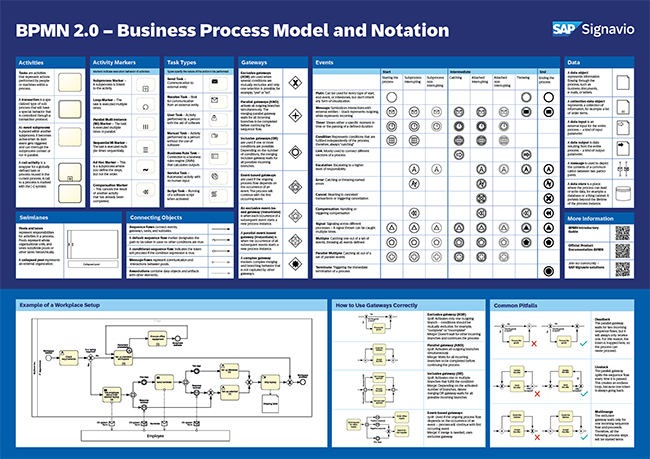
Get a BPMN 2.0 overview poster with the various graphical elements, examples of applications, and their meaning.