BPM Software Cost: Evaluate and Build the Business Case
BPM software cost is defined as the total investment required to deploy, integrate, operate, and sustain a business process management platform across an organization's process landscape.



BPM software cost is defined as the total investment required to deploy, integrate, operate, and sustain a business process management platform across an organization's process landscape.
The cost of a business process management platform is a scope equation, not a catalog price. Implementation effort, data volume, and change management requirements determine the actual investment: no two organizations with different process landscapes arrive at the same number.
Getting that scope right is also the foundation of a credible BPM program investment case.
Four drivers determine what an enterprise BPM investment actually costs. Unlike self-serve SaaS, enterprise BPM software vendors do not publish per-seat pricing, because cost depends on each organization's process landscape, data environment, and governance maturity.
The custom quote model for enterprise BPM is the norm across the category, not a quirk of any single vendor. It exists for the same reason enterprise ERP and data platform contracts are custom-negotiated: implementation cost and value scope vary too much across organizations for a published rate card to be meaningful.
The perception that custom pricing means opacity misrepresents enterprise software procurement. Enterprise BPM vendors provide scenario-based total cost of ownership models before contracts are signed; the commercial conversation maps investment to specific use cases, not to an abstract platform cost.
What drives the "opaque pricing" perception is usually two things: buyers comparing enterprise suite costs to standalone point tools, and buyers comparing investment levels without accounting for what that investment actually delivers. Both produce a misleading picture.
A license comparison between an enterprise BPM suite and a standalone process mining or modeling tool will typically show a lower headline number for the point tool, but that is not the relevant comparison.
The relevant calculation is the total cost of achieving the same outcome: the standalone process mining license, plus the standalone modeling license, plus integration work connecting them, plus data model maintenance, plus the overhead of two separate vendor relationships and upgrade cycles.
Most organizations that have run this calculation find fragmented tooling costs equal or exceed the enterprise suite, particularly over three to five years. The suite price looks higher in year one; the three-year TCO view is what makes the investment case credible to a CFO.
A structured BPM evaluation produces a cost comparison that holds up to CFO scrutiny. Most organizations skip one or more of these steps and end up comparing a vendor quote against an incomplete baseline.
Start with the processes you intend to cover in year one, not the full enterprise scope you might reach in year three. Your initial scope determines the data volume, integration requirements, and implementation effort that vendors will price against. Three to five high-priority processes with clear ownership and measurable performance gaps is enough to anchor the evaluation.
Ask each vendor for a scenario-based TCO model anchored to your defined scope, not a platform-level estimate. A credible model covers license structure for your scope, estimated implementation effort for your environment, data preparation cost given your source systems, and ongoing operational cost. A vendor that cannot produce a use-case-specific TCO estimate before contract stage is not structured for commercial transparency.
Before comparing vendor proposals, establish what you currently spend to achieve the same outcomes manually or with fragmented tooling:
This baseline is what makes the evaluation concrete. Most organizations find that current-state costs exceed platform costs when calculated honestly, particularly once audit cycles and manual analysis are included.
With a baseline and vendor models in hand, the comparison is straightforward: vendor TCO minus current-state cost minus implementation cost, over a three-year horizon. Year one almost always favors the status quo. Year three typically inverts that. A three-year view is the appropriate lens for any enterprise software investment decision.
Any evaluation conversation should produce answers to five questions before a contract is signed.
The vendor that answers all five questions before the contract is signed demonstrates commercial transparency. A vendor unable to provide a use-case-specific TCO estimate at the evaluation stage is a more meaningful indicator of pricing opacity than whether prices are published on a website.
ROI from a BPM investment is most defensible when built from a specific process, not a platform-level value statement. A business case anchored to one or two high-value processes (where inefficiency is already measurable) is concrete enough to defend to a CFO; a claim like "X% efficiency improvement across the business" is not.
The ROI calculation has four components for most organizations.
A business case for BPM software needs four components to pass finance review. A case lacking any of them stalls at the CFO's desk.
Anchor the business case to at least one specific process where the cost of current-state inefficiency is measurable. Cycle time variance, error rate, compliance exceptions, and manual intervention volume all work as measurement points. The calculation: (deviation from designed performance) × (process volume) × (unit cost of deviation). A single well-measured bottleneck is more persuasive than a platform-level efficiency estimate.
Finance expects a scope-to-cost mapping, not a platform-level investment figure. Use the vendor TCO model to show how the implementation is phased, what triggers a repricing event as scope expands, and what the year-one investment looks like versus years two and three. Build the case on year-one scope. Model expansion separately. Scope creep is the primary reason BPM business cases fail after approval.
Build the model on the four value drivers in the section above: time-to-insight savings from process mining, conformance monitoring replacing audit cycles, improvement ROI on the named bottleneck, and avoided tooling consolidation cost. Assign conservative estimates to each driver. A business case built on conservative assumptions is more defensible under scrutiny than one built on best-case numbers. Year-one ROI is typically negative or marginal; payback for focused implementations typically falls between months 12 and 18.
CFOs approve one page. The supporting model lives behind it. The summary contains the named process, the measured gap, the investment, and the payback timeline. Lead with the one-page summary in the executive review. The full model is available for the detailed session; it should not lead the conversation.
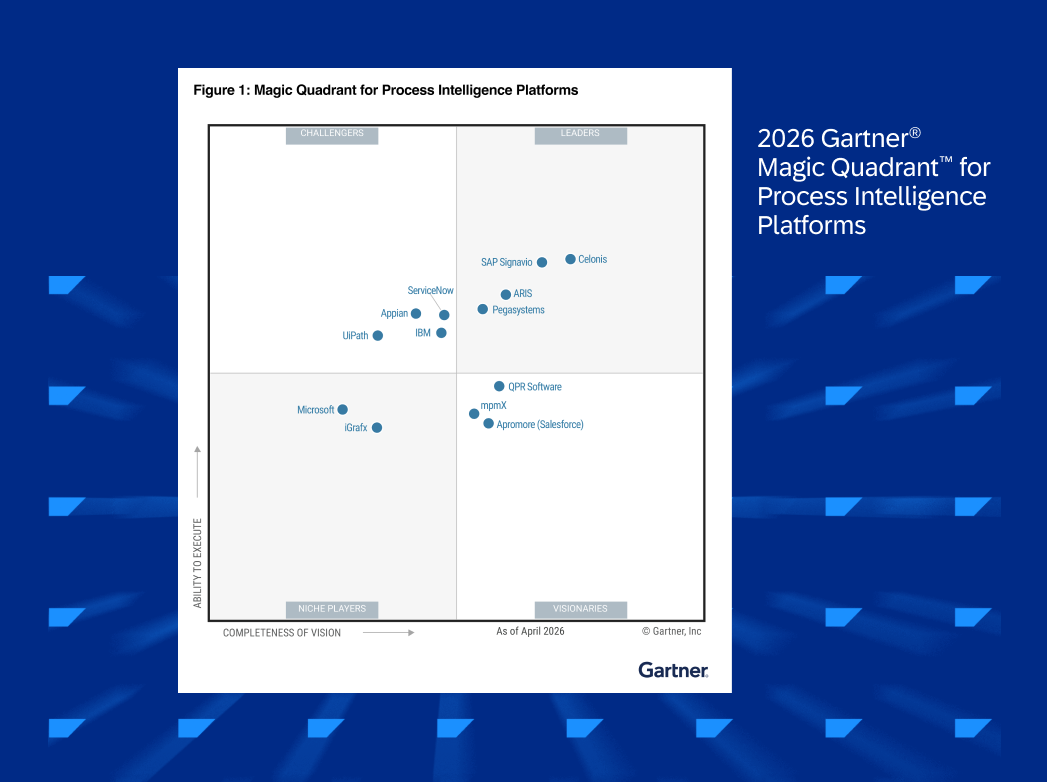
SAP Signavio provides a scenario-based Total Cost of Ownership view mapped to specific use cases before contracts are signed. The commercial process maps investment to prioritized use cases upfront, so the ROI case is established at the evaluation stage rather than deferred to late-stage negotiation.
"SAP Signavio provides invaluable insight into our organisation's processes, which we did not had ever before."
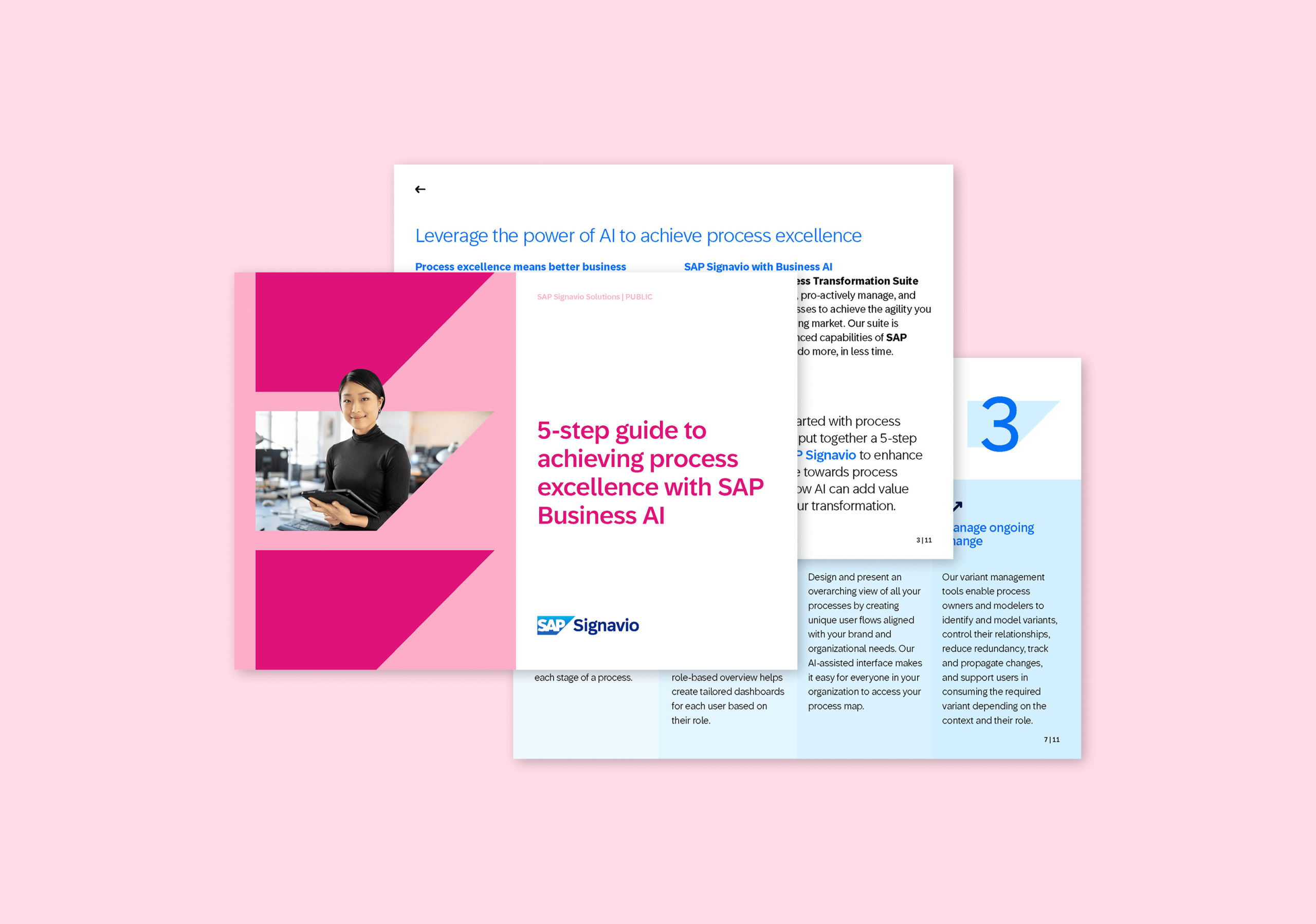
A practical guide to combining process intelligence and AI to drive continuous improvement across your organization.

Most enterprise BPM platforms combine user-based and volume-based components: modeling licenses scale with process contributors, mining licenses with event volume (the amount of execution data analyzed). As organizations expand BPM coverage from one or two processes to a broader transformation program, the commercial model needs to accommodate that expansion without a full repricing cycle.