What is process intelligence?
Process intelligence is the discipline of using operational data from enterprise systems, including ERP, CRM, and workflow platforms, to understand how business processes actually execute. The analysis identifies where they deviate from their intended design and where the highest-value improvement opportunities lie.
Its core analytical mechanism is process mining, the technique that reconstructs actual process flows from event log data. But the discipline places that technique within a broader practice. Process mining produces a factual picture of what happened. Process intelligence adds the analytical layer that turns that picture into a prioritized set of actions. It determines which bottlenecks to fix first, which conformance failures carry the most risk, and which process variants are driving cost.
Process intelligence answers questions that operational reporting cannot. Where operational reporting shows what KPIs measure, process intelligence answers why they are off track and which specific process behavior is causing it. Business managers in finance, procurement, and operations use it for this purpose. It moves prioritization from opinion to evidence from actual execution.
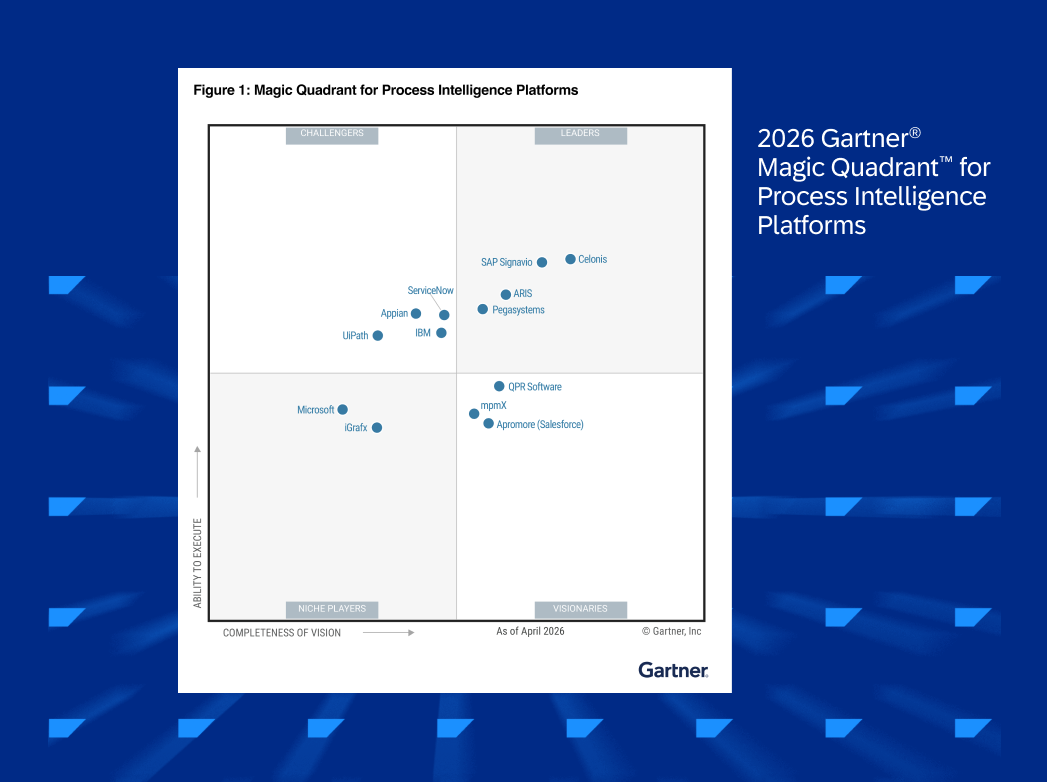
The term also describes the category of software platforms that deliver these capabilities. These platforms combine automated data extraction, process mining algorithms, AI-driven recommendations, and continuous monitoring. SAP Signavio Process Intelligence is one such platform, built for SAP and non-SAP environments. The mechanics behind those capabilities begin with the data they depend on.
How it works
Process intelligence starts with event log data: the timestamped records generated by every action taken within a business system. An invoice approved, a purchase order created, a service ticket resolved: each leaves a trace recording what happened and when. It also records who performed the action. This structured execution data is the raw material for every analysis that follows.
The four stages are:
1. Data extraction
Pre-built connectors pull event log data from source systems directly into the process intelligence platform. These include SAP S/4HANA, Salesforce, ServiceNow, and Oracle. For SAP environments, native extractors reduce setup from weeks to hours. For non-SAP systems, connector availability and data quality are the main variables.
2. Process discovery
Process mining algorithms reconstruct the actual sequence of steps taken across all process instances. The output is a process map showing every path a process takes in reality. It does not show just the intended design documented in a BPMN model. A Purchase-to-Pay process designed with three approval steps may run across a dozen variants in practice. Each variant carries different cycle times and error rates.
3. Analysis and conformance checking
With the actual process map in place, analysts identify where execution breaks down. Bottleneck detection identifies the steps causing delays or rework. Conformance checking compares actual execution against the reference model and reveals skipped steps, bypassed approvals, and compliance gaps. Both operate on the same underlying event data; the difference is what question they answer.
4. AI-driven recommendations and continuous monitoring
AI analyzes bottleneck patterns, variant frequencies, and process attributes to identify improvement opportunities and rank them by potential impact. Continuous monitoring detects when an improved process regresses or new deviations emerge, turning one-time analysis into an ongoing improvement cycle. Together, these four stages form a closed loop from raw event data to AI-prioritized action, and each stage corresponds to a distinct platform capability.