What are Process Atoms?

Process Atoms are machine-readable building blocks of enterprise behavior that combine behavioral intent, data conditions, and observability, giving AI agents the structured process context they need to act within defined boundaries and giving organizations an auditable governance record of every autonomous action.

What are Process Atoms?

Process Atoms are meaningful building blocks of enterprise behavior that underpin process and decision intelligence: machine-readable units that combine a specific behavioral intent, the data conditions under which that behavior applies, and an observability layer that records whether the behavior was followed.

Each Process Atom encodes a single, discrete piece of business logic in a form that AI agents, process mining algorithms, and governance tools can all consume directly. A Process Atom might define an approval boundary ("a purchase order above €50,000 requires dual sign-off from Finance and the relevant cost center owner"), an exception pattern ("if an invoice arrives without a matching PO, flag for manual review before processing"), or a compliance constraint ("payroll adjustments require a supporting document attached before submission").

This structure connects three layers of process knowledge that are typically fragmented. BPMN process models describe how a process should flow. Event logs record what actually happened. Business rules define what is permitted. Process Atoms bridge all three by translating normative business rules into a format that AI agents can query at runtime, conformance tools can verify after the fact, and governance teams can trace in an audit record.

In SAP Signavio, Process Atoms are the structural layer of company memory — the organizational knowledge store that AI agents query at runtime to verify what they are and are not authorized to do. Where company memory is the store, Process Atoms are the units it is built from.

SAP Signavio Process Atoms is a cross-suite concept within the SAP Signavio Process Transformation Suite. It spans process mining, process modeling, and AI. It is not a standalone product — its cross-suite design is a direct response to the governance gap that arises when AI agents begin executing business processes.


The governance problem Process Atoms solve

Organizations deploying AI agents in business processes face a structural governance gap that neither BPMN models nor event logs adequately close.

BPMN process models define the intended flow, but they are static. They describe how a process should run in the designed scenario; they do not express the conditional logic, edge-case handling, or exception rules that govern real execution. An agent that follows the BPMN flow correctly may still be acting incorrectly, because the model does not encode the business rules that authorize or prohibit specific actions.

Event logs, by contrast, record what happened in granular detail, but they record the action, not the intent. A log entry shows that an agent approved an invoice; it does not record whether that approval was permitted under the relevant business rule, or whether the data conditions required for that approval were present.

This creates a governance gap: agents can produce actions that are "locally plausible," consistent with what a log might show, but organizationally incorrect. They may violate compliance constraints or fall outside the scope the organization intended. Process Atoms close this gap. They sit between the process model and the event log, encoding business intent so that agent actions are governed at runtime and auditable after the fact.

The 10-Step Guide to Achieving Process and Experience Excellence_preview_en

10-Step Guide to Achieving Process and Experience Excellence

All businesses have the same goal: to run at their best. But all too often, there’s a disconnect between operations and experience. What’s missing is an outside-in perspective on operational excellence and transformation efforts. This can help you drive a differentiating edge in the market and ongoing financial success.
Download now

How Process Atoms work

A Process Atom is a structured unit with three interlocking components that together govern agent behavior across the moment of execution and the audit record that follows. Each component addresses a different layer of the governance problem: what the rule is, when it applies, and whether it was followed.

Process Atoms consist of three components:

Behavioral intent

Behavioral intent defines what the Process Atom governs: the specific action, decision, or constraint it encodes. This is the meaningful piece of business logic: "require dual approval for high-value transactions," "block escalation if SLA threshold has not been reached," "validate supplier master data before PO creation." The intent is expressed in language that both business stakeholders and AI agents can interpret.

Data conditions

Data conditions define when the Process Atom applies: the specific data state or process context that activates it. A Process Atom governing invoice approval activates when invoice value exceeds a defined threshold and the supplier is not on the pre-approved list. Without the data conditions layer, a Process Atom is a static rule. With it, the Process Atom activates only when all conditions are present.

Observability

Observability is the component that makes the Process Atom auditable. Every time a Process Atom is evaluated, whether the agent satisfied it or violated it, the evaluation is recorded with a timestamp, the triggering data conditions, and the outcome. This produces an audit record generated at the moment of execution, not reconstructed afterward from the event log: a trace that can demonstrate, for any specific agent action, which Process Atom authorized it and under what conditions.

When a regulation changes, the relevant Process Atoms can be updated directly. There is no need to redesign the surrounding process model or restructure the broader BPMN flow, and this separation between governance logic and process structure is what gives Process Atoms their governance reach.


Governance capabilities

Process Atoms have four governance capabilities, each tied to a distinct challenge in managing AI agents within business processes. These capabilities compound rather than operate in isolation: explainability depends on boundary definition, and continuous governance depends on the observability that each Process Atom produces.

Capability What it enables
Explainability When an agent action is grounded in a specific Process Atom, the explanation is precise: the Process Atom that activated, the conditions that triggered it, and whether the constraint was satisfied or violated. No post-hoc interpretation required.
Boundary definition Process Atoms define exactly what agents can and cannot do, under what conditions, and with what data. Agents act because a specific Process Atom authorized the action, not because a model approximated correct behavior.
Continuous governance Shifts process governance from a periodic audit activity to a continuous, executive-visible capability. Conformance against Process Atom boundaries is measured in real time across every agent action, not sampled retrospectively.
Agile rule updates When business rules change, due to regulatory updates, process redesigns, or new exceptions, the relevant Process Atoms are updated directly. The surrounding process model does not need to be redesigned. Governance stays current without structural rework.

Together, these four capabilities make it possible to govern AI agents at scale. Individual agent actions are traceable to the specific Process Atom that authorized them, and the resulting governance record carries the granularity that risk, compliance, and internal audit functions require.

BPM Resources

Critical Business Transformation Insights for Lasting Impact
Redefining the possibilities of business transformation management.
7 Step Guide to Operational Excellence
Get a clear, actionable steps and tips from process leaders on how to achieve operational excellence, independent of allegiances to any particular methodology.
Unlock the Hidden Value in your Business Processes
Want to boost your bottom line, improve cash flow, and minimize risk? If so, this value cookbook is your go-to guide for making it happen.
How to Harness AI in Business Transformation Management
Learn about the role of AI in business transformation management and concrete steps toward successful implementation.

Benefits

Process Atoms provide five operational advantages for organizations deploying AI agents in business processes. These benefits extend beyond compliance posture: they reduce engineering overhead, make governance visible to leadership without custom dashboards, and produce a governance record that grows more complete as agents handle more cases.

  1. Explainability at the action level. Every agent action can be traced to the specific Process Atom that authorized or governed it, including the data conditions that activated it and whether they were satisfied. Explainability is produced at the moment of execution, not reconstructed from logs after the fact.
  2. Governance without model completeness. Process Atoms can be defined directly from business rules, event log patterns, or stakeholder documentation without first completing a full BPMN process model. Organizations with partial modeling coverage can still apply governed, auditable constraints to AI agent behavior.
  3. Rule updates without structural rework. When a business rule changes, the relevant Process Atom is updated once. Every agent and conformance check that references that Process Atom reflects the change automatically, without redesigning the surrounding process model or redeploying individual agents.
  4. Continuous rather than periodic governance. Conformance is measured in real time across every agent action rather than sampled during periodic audits. This produces a continuously updated governance signal that reflects current agent behavior, not a retrospective snapshot.
  5. Separation of business logic from agent implementation. AI engineers reference the Process Atom library to establish what agents are permitted to do, rather than encoding governance logic directly into each agent's prompts or code. This keeps business rules in the hands of business stakeholders and reduces duplication across agent implementations.

Capturing these advantages depends on how the Process Atom library is introduced and maintained — and there are genuine adoption constraints to account for.


Challenges and limitations

Process Atoms introduce adoption requirements and constraints that organizations should evaluate before committing to the approach. The most significant barriers are organizational rather than technical: they require business stakeholders who can articulate rules precisely, and a process documentation baseline that many organizations have not yet established.

  1. Authoring effort. Defining Process Atoms requires business stakeholders who can articulate behavioral intent precisely, including the exact data conditions under which a rule applies and the exceptions that override it. For processes that rely on tacit judgment or informal norms, this precision is difficult to achieve and may require significant facilitation before authoring can begin.
  2. Process maturity prerequisite. Process Atoms are most effective when the organization already has a clear, documented understanding of how processes should run. Organizations with low process documentation maturity face a bootstrapping problem: process discovery and documentation is a prerequisite to Process Atom authoring, not a byproduct of it.
  3. Governance overhead. Each Process Atom needs a named owner responsible for keeping it current as business rules, regulations, and policies evolve. Without clear ownership and a maintenance cadence, the Process Atom library becomes stale and the governance it provides degrades over time.
  4. Agent framework dependency. Not all AI agent frameworks expose the hooks required to query an external Process Atom library at runtime. Integration complexity varies by framework, and organizations using frameworks that do not natively support external rule lookups may need custom middleware to connect agents to the Process Atom library.
  5. Emerging practice. Process Atoms as a structured concept for governing AI agent behavior is new to the market. Established patterns for large-scale deployment, cross-organizational governance, and Process Atom library management are still forming. Organizations adopting early should expect to develop internal practices without the benefit of mature industry reference implementations.

The practices below address these constraints at the most common points of failure.

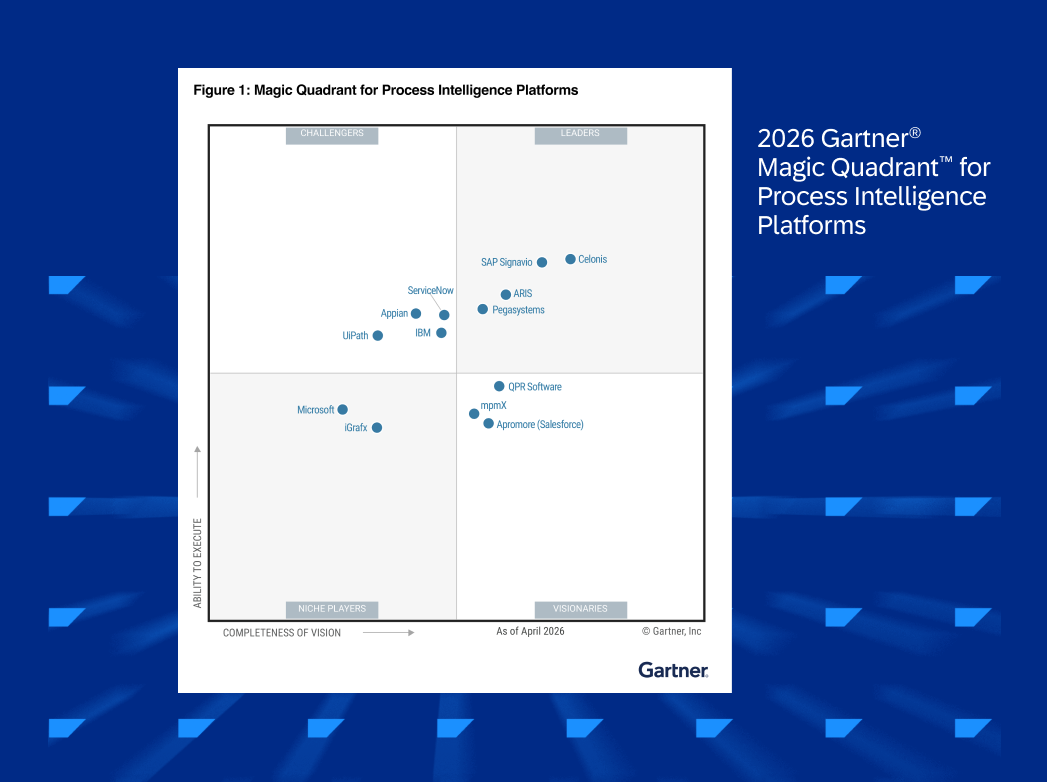
SAP Signavio: Year 4 as a Gartner® Magic Quadrant™ Leader

Best practices

Effective Process Atom adoption depends as much on how you start as on the completeness of the library you build. The practices below reflect patterns that consistently separate successful rollouts from stalled ones, from starting in compliance-sensitive areas to treating agent mining findings as a feedback mechanism rather than a reporting tool. They apply regardless of the number of Atoms in scope at launch.

  1. Start with compliance-sensitive processes. Financial controls, procurement approvals, and HR decisions are the highest-value starting points. The consequences of deviation are well-defined, rule adherence is measurable, and regulators or internal audit functions are likely to request documented evidence of compliance. Early Process Atom definitions in these areas also establish authoring patterns that transfer to other processes.
  2. Define behavioral intent in business language before adding data conditions. Building Process Atoms from data conditions first produces brittle definitions that break when data schemas change. Starting from behavioral intent ("require approval before committing budget above threshold X") produces Process Atoms that remain stable when the underlying data structure evolves, because the intent is independent of the implementation.
  3. Version control every Process Atom. Tie versions to regulatory changes, policy updates, or process redesigns so that the audit trail can answer the question: which version of this rule was in effect on a specific date? This is the mechanism that connects Process Atom governance to regulatory audit and legal defensibility.
  4. Use agent mining as feedback on Process Atom quality. If agents consistently deviate from a Process Atom, the Atom may be mis-specified rather than the agent misbehaving. Systematic deviations are evidence that the behavioral intent or data conditions need revision. Agent mining findings should feed back into the Process Atom authoring cycle, not just into agent retraining.
  5. Assign a named owner to each Process Atom. Ownership should sit with the business function responsible for the underlying rule, not with the engineering team that implemented the agent. The business owner is responsible for keeping the Atom accurate and current, and for initiating updates when the underlying rule changes.

Whether these practices are sufficient depends on whether Process Atoms are the right fit for the organization's current situation; the alternatives section addresses that directly.


Alternatives

Several approaches address parts of the process governance problem that Process Atoms are designed to solve. Each has a different scope, maturity, and fit depending on the organization's situation.

Business rules engines (BRMS)

Business rules engines execute conditional if-then logic within a single system or application. They work well for rule execution in deterministic, well-defined scenarios. BRMS do not carry process context, cannot express behavioral intent across a flow, and produce no cross-process audit trail. Process Atoms extend them with process scope and observability.

Decision Model and Notation (DMN)

DMN is a formal OMG standard for expressing decision tables and decision requirements diagrams. It handles complex decision logic well but is scoped to decisions rather than broader procedural behavior across process steps. DMN and Process Atoms are complementary: DMN can formalize the decision logic that informs a Process Atom's data conditions.

BPMN sequence constraints

Process models can encode some behavioral constraints through gateways, sequence flows, and conditional transitions, but are limited to structural control flow. They cannot encode conditional data logic, carry behavioral intent across the full process, or produce the agent-queryable runtime governance that Process Atoms provide. Process Atoms extend what BPMN constraints can express.

LLM system prompts

AI agents are currently governed in most organizations through natural-language instructions in system prompts. System prompts are flexible and fast to update, but they cannot be audited or versioned, do not support conformance checking, and are inconsistent across agents. System prompts operate at the agent level; Process Atoms operate at the process level. Process Atoms provide the governed, auditable alternative.

No structured governance

Most organizations currently deploy AI agents without a formal process-level governance layer. Agents act on general training data, system context, and individual system prompts. This is the default state across the industry, not a minority practice.

For organizations not yet deploying AI agents in business processes, BPMN combined with a BRMS covers most governance needs adequately. Process Atoms become relevant when agents begin executing process steps autonomously and the organization needs to govern, audit, and explain that behavior at the process level. That means tracing individual agent actions to the business rules that authorized them — which is the role that agent mining, in combination with Process Atoms, is built to fulfill.


How agent mining closes the loop

Process Atoms define the governance boundaries within which AI agents should act. Agent mining verifies, across every agent-handled case, whether agents respected those boundaries.

The two form a closed governance loop. Process Atoms encode what agents are authorized to do, and agents query that knowledge at runtime through company memory via MCP. Agent mining analyzes agent event logs using process mining techniques to reconstruct actual agent behavior and run conformance checking against the Process Atom boundaries. Where deviations are detected, the findings feed back into the Process Atom library. Constraints can be tightened, conditions added, or edge cases flagged for human review and Process Atom validation.

This loop transforms AI agent governance from a configuration problem (define rules once, assume compliance) into a continuous improvement program with the same analytical rigor that process excellence teams apply to human-executed processes. The governance question shifts from "have we set the right rules?" to "are agents consistently following the rules we set, and where are the rules themselves in need of refinement?"

For organizations running agents in compliance-sensitive processes (financial controls, procurement approvals, HR decisions), this continuous loop is how they substantiate governance claims to regulators, auditors, and internal risk functions. Sustaining it requires three distinct internal roles, each engaging with Process Atoms at a different point in the governance cycle.


Teams and roles

Three distinct audiences within the organization interact with Process Atoms, each at a different point in the governance cycle. Their needs overlap but are not identical: the AI engineer's concern is runtime constraints, the process excellence team's concern is conformance and refinement, and the executive's concern is accountability and risk visibility.

  • AI engineers and development teams use Process Atoms to define the operational constraints within which agents act at runtime. Rather than building governance logic directly into each agent's prompt or code, engineers reference the Process Atom library to establish what the agent is permitted to do. When the business rule changes, the Process Atom is updated, not the agent.
  • Operations and process excellence teams use Process Atoms to audit and refine agent behavior with the same methods they apply to human-executed processes. Conformance checking against Process Atom boundaries identifies which cases the agent handled correctly, which deviated, and what the deviation pattern looks like. Teams can trace a specific agent action to the Process Atom that governed it, assess whether the Process Atom's conditions were satisfied, and propose refinements where the rule itself needs adjustment.
  • C-suite and board stakeholders use the Process Atoms governance record as the executive-visible layer of AI accountability. The continuous conformance report answers the governance questions that matter at that level: are agents operating within their defined boundaries, which process rules are being violated most often, and what is the organizational risk exposure from current agent behavior? This replaces periodic sampling with a continuous signal that connects operational AI behavior to strategic risk and compliance obligations.

SAP Signavio Process Intelligence is the platform for managing Process Atoms alongside agent mining, process mining, and conformance checking. It combines all four capabilities in a single product covering both human-executed and agent-executed process steps.

Process Atoms

Discover how process atoms work as building blocks for AI-powered process transformation, governance, and continuous improvement.

Frequently Asked Questions

Is Process Atoms a standalone product?

No. Process Atoms is a cross-suite concept and capability within the SAP Signavio Process Transformation Suite. It operates across process mining, process modeling, and AI, and is accessed through SAP Signavio Process Intelligence. It is not available as a separate purchase and is not a standalone product.

How is Process Atoms different from a business rules engine?

Do Process Atoms require complete, up-to-date BPMN process models to work?

What is the relationship between Process Atoms and Process Intelligence?

What does adopting Process Atoms require organizationally?

Are Process Atoms a replacement for a BRMS or DMN?