What is AI Agent Mining?

AI agent mining is the application of process mining techniques to event logs generated by AI agents. It gives organizations a way to observe how autonomous agents execute business processes, identify behavioral deviations, and verify that agent actions remain within defined process boundaries.

What is agent mining?

The same process mining techniques that reveal how humans and enterprise systems carry out work apply equally to autonomous AI agents. Rather than analyzing human-generated system logs, the analysis targets the event logs agents generate as they execute business process steps: what actions they took, in what sequence, and what outcome each produced.

The analytical model follows process mining's core approach. Every AI agent action within a business system produces a trace: a timestamped record of what the agent did, which process step it was executing, and what data condition triggered it. Those traces are collected across all agent runs to reconstruct actual behavioral patterns and identify where execution deviates from expected process boundaries.

When AI agent deployments scale to cover operational tasks (routing purchase orders, resolving service tickets, processing invoices, managing exceptions), the volume of agent-generated event data grows. The purpose is to make that data usable for governance: recording what agents did, determining whether their actions fell within defined boundaries, and building that record through a structured four-stage process.


How agent mining works

The method follows the same steps as process mining, applied to agent-generated event data rather than human-generated system logs. Each stage addresses a specific governance question about agent behavior, from raw event capture through to continuous monitoring and feedback.

1. Agent event log data extraction

Every action an AI agent performs within a business system generates an event log entry. The minimum data structure matches standard process mining. Required fields are: a case identifier (the process instance the agent was handling), an activity name (what the agent did), and a timestamp. For agent mining, additional attributes are also relevant: the model or agent version that executed the action, the data conditions that triggered it, and the outcome it produced.

2. Behavioral process reconstruction

Process mining algorithms reconstruct the actual sequence of steps the agent followed across all cases. The output is a behavioral process map: it shows every path the agent took, including common routes, exceptions, and deviations from the intended design. An agent designed to follow a single escalation path for purchase order approvals may, in practice, take a dozen variant routes, depending on system state and data conditions at the time of execution.

3. Conformance checking against process boundaries

The reconstructed agent behavior is compared against the intended process design. This may be defined in a BPMN 2.0 model, encoded in Process Atoms, or both. Conformance checking identifies where agents bypassed approval steps, triggered actions outside their defined scope, or handled edge cases in ways that violate business rules.

4. Continuous monitoring and feedback

Continuous monitoring is where the method delivers the most value: as a continuous capability rather than a one-time analysis. Live monitoring detects behavioral drift as it emerges. When an agent that previously operated within its defined boundaries begins taking new paths, the deviation surfaces immediately. It does not wait for a periodic audit cycle.

The four stages follow the same logic that process intelligence applies to human-executed processes. The two connect as a feedback loop: process intelligence informs the governance boundaries agents operate within, and agent event logs feed back into process intelligence as new execution data. That shared analytical foundation is also what clarifies how agent mining relates to, and differs from, process mining as a practice.

A Comprehensive Guide to Process Mining: How to Make Better Decisions Faster

Download a detailed white paper covering what process mining is, the value it offers, and why now is the right time to launch your own process mining initiative.
Download now

Agent mining vs. process mining

Both approaches reconstruct process behavior from event log data using the same family of algorithms. The difference is in what generates the event data and what governance questions each method answers.

The two are not alternative approaches. They are sequential. Process mining establishes the factual process baseline and defines what correct execution looks like. The analysis then checks whether AI agents are executing against that baseline, identifying cases where they are not. The capabilities that make that checking work each address a specific governance question about agent behavior.


Core capabilities

Five operational capabilities, each answering a specific governance question about AI agent behavior in enterprise processes. Together they cover the governance gaps that security-layer observability tools leave open, because the analysis runs at the process execution level rather than the network or API layer.

Capability What it answers
Trace analysis What exactly did this agent do across each process step, in what order, and why?
Deviation detection Where did the agent diverge from the intended process path or defined boundaries?
Performance benchmarking How does this agent version compare to prior versions on process time, accuracy, and exception rate?
Compliance audit trail Can we demonstrate, for a specific agent action, which process rule authorized it and when?
Cost and efficiency monitoring What is the computational and process cost of agent-handled cases vs. human-handled cases?

These capabilities address business logic governance, not infrastructure concerns. They analyze process-level behavior and business rule adherence, not network traffic or system access patterns.

Process Discovery Resources

AI Maturity Matrix – How Process Intelligence Is Driving Business Transformation
Discover the difference between process intelligence solutions that simply have AI features, and those like SAP Signavio that fully synergize with it.
2025 SPARK Matrix™ for Process Mining
Download a complimentary copy of the 2026 SPARK Matrix™ Report for Process Mining Solutions to gain insights from a trusted global analyst firm on process mining market trends.
AI Interplays with the Process World
Learn more about AI’s role in transforming processes and how process experts and the entire business can benefit.
5-step Guide to Achieving Process Excellence with SAP Business AI
This guide unlocks ways a mature, harmonized operational landscape, with clear and efficient processes, helps cuts waste, enhance performance, and ensure all activities are aligned with your strategic goals.

Why agent governance requires process context

Most AI agent observability approaches focus on the infrastructure layer: monitoring API calls, token consumption, latency, and error rates. These metrics are necessary. But they do not address the most operationally relevant question: did the agent act correctly within its business process context?

An agent that executes every API call within latency targets can still bypass an approval requirement. It may process an order for a blocked customer, or escalate a case in a way that violates a regulatory control. Infrastructure observability captures none of these. They are business logic failures, not infrastructure failures. Detecting them requires analysis at the process execution level, against the specific process rules and boundaries the organization has defined.

The gap is at the process level. Security and infrastructure tools observe agents through system metrics; process-level analysis uses the same event log data and conformance checking methods that process mining applies to human-executed processes. The result is a governance record of whether the agent ran correctly and whether its actions were consistent with the organization's process rules and compliance obligations.


Five governance benefits

AI agent mining provides governance value across the full agent lifecycle, from initial deployment through continuous operations. The five benefits below apply directly to organizations running agents in compliance-sensitive or high-volume business processes.

  1. Continuous behavioral governance rather than periodic audit: Traditional compliance audits review agent behavior retrospectively, often weeks or months after deviations have occurred. Ongoing conformance checking across every agent-handled case keeps governance active rather than retrospective: deviations are flagged as they accumulate, not after they have already affected downstream decisions.
  2. Process-level explainability, not just infrastructure logs: Infrastructure monitoring records that an agent made an API call. Agent mining records what process step the agent was executing, what data conditions were present, and whether the resulting action was within scope. In governance or audit conversations, that distinction is what makes an explanation usable: it describes what the agent did in business terms, not technical ones.
  3. Deviation detection before compliance failures escalate: Many compliance failures in automated processes are not caused by a single critical error. They arise from a pattern of small deviations that compound over time. Those patterns surface across large case populations, before any individual deviation has escalated to a reportable incident. Early detection reduces the cost of remediation and limits exposure in regulated processes.
  4. Audit-ready trail at the level regulators require: Regulatory frameworks governing automated decision-making now require organizations to show that specific decisions were made within defined rules, and that a human-reviewable record exists. A trace-level audit record links each agent action to the process step it was executing and the rule that governed it. That level of accountability is not available from system access logs or API call histories.
  5. Feedback loop that improves both agent configuration and process rules: The event data reveals where agents deviate from defined processes. It also shows where the defined process itself may be incomplete or misaligned with actual operating conditions. High deviation rates in a specific variant often indicate that the underlying process model needs updating, not that the agent is misconfigured. Over time, this feedback makes both agent governance and process management more accurate.

The processes where these benefits are most immediately realized share a consistent profile: high agent activity, defined compliance requirements, and material consequences when agents deviate.

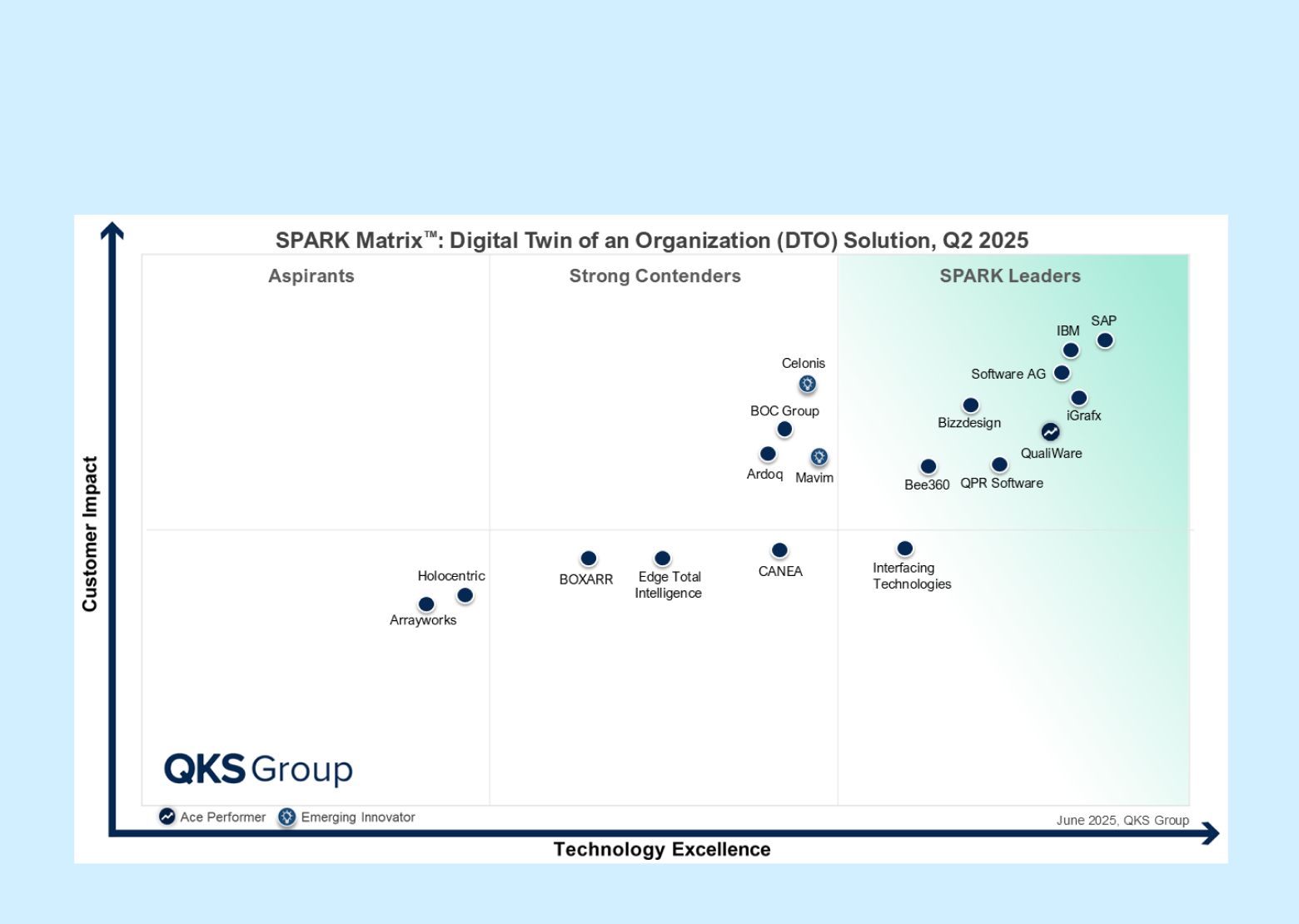
Five times in a row: SAP is a Leader in the SPARK Matrix™ for DTO Solutions 2025

Where AI agent mining applies

Agent mining applies most directly to processes where AI agents execute defined, repetitive steps and where business rule adherence is measurable. High agent activity, clear compliance requirements, and material risk exposure characterize each use case below.

Financial controls and procurement

AI agents handling financial process steps create direct audit and control exposure when they deviate from defined approval rules.

AI agents now handle many high-volume financial process steps: invoice approval routing, purchase order creation, three-way match validation, and payment release. These processes carry direct financial and audit risk, making behavioral governance a practical requirement.

Applied to financial process agents, the analysis detects specific deviation patterns: approval steps bypassed because of system state conditions, payment transactions processed for vendors on restricted lists, and purchase orders created out of sequence relative to budget authorization. Each of these is a business rule violation that may not surface in infrastructure logs or financial reconciliation until long after it occurred.

For procurement specifically, conformance checking against the defined approval hierarchy catches two common errors: an approval routed to the wrong authority level, or a mandatory review step skipped. Over high transaction volumes, even low-frequency deviation rates can represent material financial control gaps.

IT service management

Deviation patterns in agent-handled ITSM workflows rarely surface at the individual ticket level, but become significant across case populations.

Agents handling IT service management tasks (ticket routing, escalation triggering, SLA monitoring, and resolution classification) generate dense event logs across high case volumes. What is invisible at the individual ticket level becomes clear at the population level.

Three main deviation types appear in IT service management logs. The first is escalation path errors: tickets routed to incorrect queues or the wrong tier. The second is SLA-breach patterns: cases where the agent's handling sequence contributed to a breach rather than preventing one. The third is misclassification rates: where ticket category assignment diverges from human-reviewed categories. These patterns inform both agent configuration updates and adjustments to the underlying service catalog and routing rules.

HR process automation

HR processes handled by AI agents carry procedural and regulatory governance requirements where incomplete sequences create compliance gaps.

HR automation covers onboarding task assignment, offboarding access revocation, and compliance training enrollment, each carrying procedural and regulatory governance requirements. Incomplete onboarding sequences, missed training assignments, or access revocation steps that were skipped or delayed create compliance gaps that may not surface until an audit or an incident.

The analysis provides a completeness record for each employee case: which process steps the agent executed, in what sequence, and whether any required step was absent or out of order. In organizations operating across multiple regions with different regulatory requirements, it verifies whether the correct regional process variant was applied to each case, preventing a default process from being applied where local rules require something different.

Order-to-Cash

Order-to-Cash deviations carry direct revenue and risk implications when agents execute steps out of sequence or against incorrect data.

Order-to-Cash processes managed by AI agents span order acceptance, credit limit checks, fulfillment triggering, and invoice dispatch. Three common deviation types carry direct revenue risk: an order accepted before a credit check completes, a fulfillment trigger sent before payment terms are confirmed, and an invoice dispatched with incorrect line items. Each represents a distinct failure mode.

Applied to Order-to-Cash event logs, the analysis reconstructs the actual execution sequence for each order case and checks it against the defined process model. Variant analysis identifies which order types or customer segments produce the highest deviation rates. This gives teams a targeted basis for process redesign or agent retraining, rather than a review of all cases. Whether this level of analysis is achievable depends on whether certain technical and organizational prerequisites are in place.


Challenges and limitations

Real constraints affect how and where this approach can be applied.

Event log structure requirements

Applying the technique requires that AI agent frameworks emit structured event logs. At minimum, each entry needs a case identifier, an activity name, and a timestamp for each action. Many current agent frameworks do not produce logs in this structure by default. Logs designed for debugging are verbose, unstructured, and developer-facing. They are not process-mining-compatible event logs. Organizations should check whether their agent framework's logging output meets the minimum data requirements before applying agent mining.

Cold-start problem

New agents have no behavioral baseline. Conformance checking compares observed behavior against an expected pattern, which requires enough case volume to distinguish genuine deviations from noise. For processes with low transaction volumes or recently deployed agents, the patterns agent mining surfaces may not be reliable. The agent must process a representative case population before those patterns stabilize. Initial governance reviews in these situations rely more on manual inspection than pattern-level analysis.

Framework dependency and log standardization overhead

Agent frameworks vary in how they structure execution data. Different frameworks produce different log schemas, event granularities, and case identification conventions. Converting these into a consistent format for process mining analysis requires real implementation work. Organizations running multiple agent frameworks in parallel face greater standardization overhead. They may need a dedicated transformation layer before agent mining can operate across all agent populations.

Human process baseline dependency

The analysis runs against a defined process model. Organizations that have not yet formalized their process models, or whose reference models are incomplete or outdated, face a prerequisite: the process baseline must exist and be accurate before conformance checking produces meaningful results. Agent mining applies most directly where process management maturity already exists. For organizations earlier in that development, building the reference process comes first. Where that baseline is already established, the next question is how to make it machine-readable and directly queryable by the agents that need to operate within it.


Process Atoms and agent mining

Agent mining identifies what agents did and where they deviated. Process Atoms define what agents should do: the machine-readable governance boundaries that authorize agent action and make that authorization auditable.

Process Atoms are structured governance units. They encode business logic, decision rules, and process constraints in a form AI agents can query at execution time. Each Process Atom defines a specific behavioral boundary: what the agent is permitted to do, under what data conditions, and what constitutes a violation. When an agent's action is grounded in a specific Process Atom, the audit trail is exact. It records which Atom was activated, the conditions that triggered it, and whether the constraint was satisfied or violated.

Together they form a governance loop. Process Atoms define the boundaries agents should operate within. The analysis checks whether agents respected those boundaries across all execution instances. Where deviations are detected, the findings feed back into the relevant Atoms: tightening boundaries, adding conditions, or flagging cases that require human review.

AI agent governance does not stop at initial configuration. It becomes a continuous improvement program with the same discipline that process excellence teams apply to human-executed processes. For organizations running AI agents in compliance-sensitive processes (financial controls, procurement approvals, HR decisions), this continuous governance record supports audit and regulatory accountability.

SAP Signavio Process Intelligence provides the platform for both agent mining and Process Atoms. It combines event log analysis, conformance checking, and the Process Atoms governance layer in a single product. Both human-executed and agent-executed process steps are supported.

4-Step Guide to AI Agent Excellence

Get the practical framework for deploying, governing, and continuously improving AI agents in enterprise processes.

Frequently Asked Questions

Is agent mining the same as AI agent monitoring?

No. AI agent monitoring typically refers to infrastructure-level observation: API call rates, latency, token usage, error rates. Agent mining operates at the process execution level: it analyzes the sequence of actions an agent took within a business process, compares that behavior against defined process boundaries, and identifies where the agent deviated from expected execution. Monitoring tells you the agent ran; agent mining tells you whether it ran correctly.

Do you need a separate tool for agent mining, or does process mining software handle it?

What processes are most appropriate to start agent mining on?

How does agent mining relate to agentic AI risk management?

What if our agent framework does not produce structured event logs?

How much case volume is needed before agent mining produces reliable deviation signals?